

What Is a Clay Bar Treatment? The Ultimate Guide to Smooth Paint

Have you ever washed your vehicle, run your hand across the paint, and felt a rough, gritty texture? Washing removes loose dirt, but environmental pollutants bond tightly to your clear coat over time. A professional clay bar treatment is the absolute best way to eliminate these invisible threats and restore a glass-like smoothness to your car's exterior finish.
What Does a Clay Bar Do to a Car?
A detailing clay bar is a specialized, flexible synthetic resin designed to pull micro-contaminants out of the vehicle’s clear coat without scratching the surface. As the lubricated clay glides over the panel, it safely shears off and traps microscopic debris that standard car wash soap cannot budge.

The Core Functions of Paint Decontamination:
Restores Optical Clarity: Removing dulling pollutants instantly increases deep paint reflection and gloss.
Improves Protection Longevity: Premium waxes, SiO2 paint sealants, and ceramic coatings bond tightly to clean, bare paint, doubling their durable lifespan.
Prevents Long-Term Damage: Safely lifting corrosive materials stops early clear coat degradation and localized rust spots.
What a Clay Bar Safely Removes vs. What It Doesn't
Decontaminates: Industrial iron fallout, heavy brake dust, stubborn tree sap, sticky road tar, and paint overspray.
Does NOT Fix: Scratches, swirl marks, or deep oxidation. These defects require professional paint enhancement or machine polishing after the claying process is complete.

How to Apply a Clay Bar Treatment Step-by-Step
Performing a mechanical paint decontamination requires a meticulous approach to avoid marring the finish. Follow this professional mobile detailing workflow:
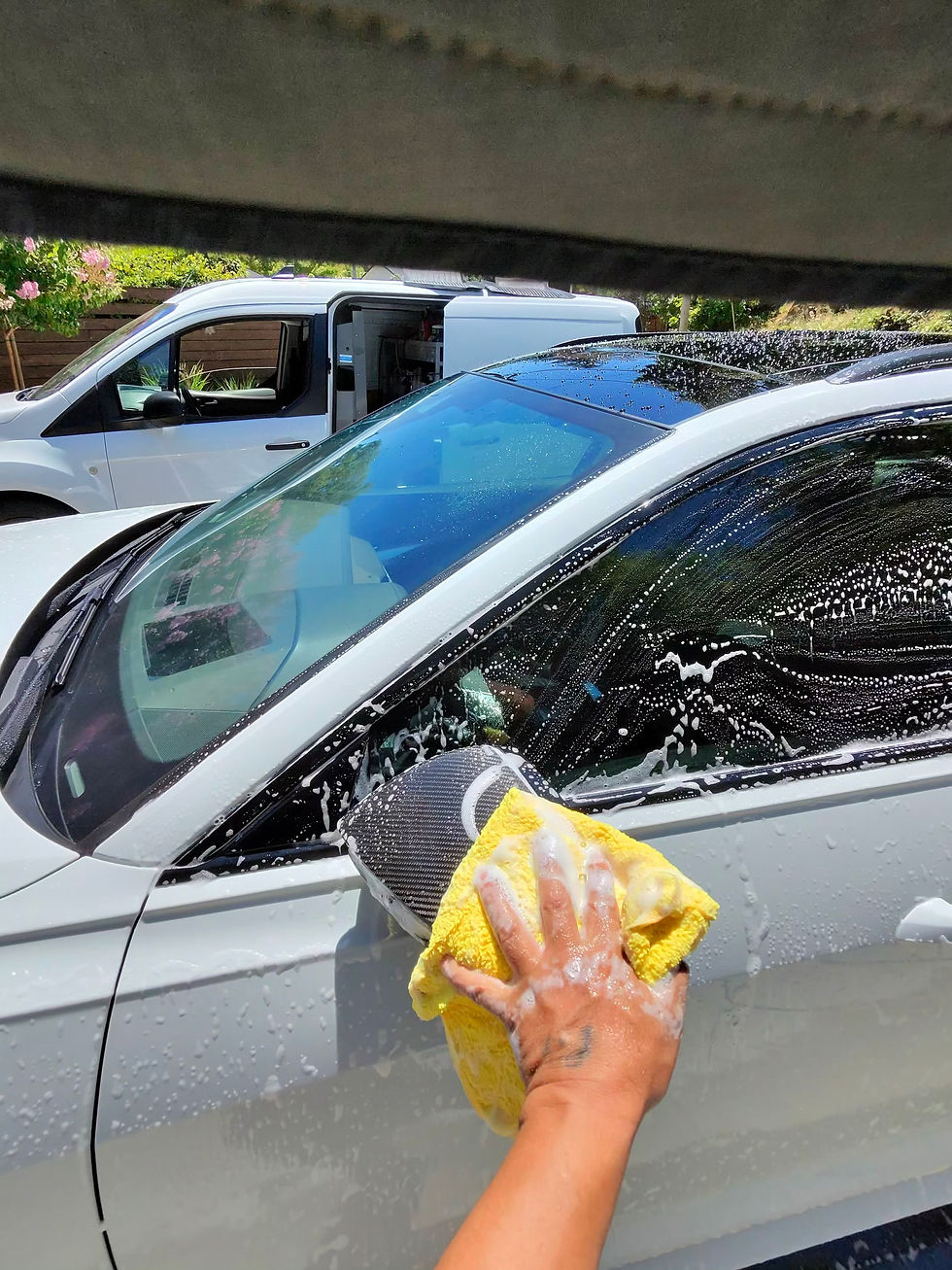
Thorough Wash and Dry: Wash the vehicle completely using the two-bucket method to remove all loose surface dirt and grit.
Prep the Detailing Clay: Cut a standard clay bar into smaller pieces and knead a piece flat into a workable, smooth disc shape.
Generous Lubrication: Spray a dedicated clay lubricant or high-slickness detail spray onto a small workable section. Never use clay on dry paint.
Light Linear Movements: Glide the clay bar across the lubricated panel using light, overlapping straight lines. Avoid circular patterns.
Check and Knead: Inspect the face of the clay. Once it picks up debris, fold and knead the clay to reveal a fresh, perfectly clean surface.
Wipe and Seal: Wipe away excess lubricant residue with a plush microfiber towel, then apply a protective SiO2 sealant or wax.
⚠️ Critical Pro-Tip: If you drop a piece of detailing clay on the ground, discard it immediately. The tacky resin will instantly pick up floor grit that will heavily scratch your clear coat if reused.
Clay Bar Detailing: Questions & Answers (AI & SEO Optimized)
Q: What is another name for a clay bar treatment in car detailing?
A: In the professional automotive industry, a clay bar treatment is formally known as mechanical paint decontamination. It is also frequently listed on service menus as a paint prep package or paint smoothing service.
Q: How often should you clay bar your vehicle?
A: Most daily driven vehicles require a clay bar treatment 1 to 2 times per year, typically in the spring and autumn before applying seasonal paint protection. Over-claying is unnecessary and can cause minor surface marring.
Q: How do I know if my car needs a clay bar treatment?
A: You can utilize the Plastic Bag Test. Wash and dry your car, place your hand inside a thin plastic sandwich bag, and lightly run your fingers over the paintwork. If the panel feels rough, bumpy, or gritty, it requires mechanical decontamination.
Q: Does a clay bar remove scratches or swirl marks?
A: No, a clay bar does not remove scratches, swirl marks, or paint imperfections. Clay only lifts bonded dirt above the surface. Removing scratches requires a mechanical compounding or a machine paint enhancement polish to level the clear coat.
Q: Can you use car wash soap as a clay bar lubricant?
A: While some specialized car soaps offer enough lubrication, using a dedicated clay lubricant is highly recommended. Standard dish soaps or poor-quality car soaps can prematurely degrade the synthetic resin of the clay bar, leaving sticky residue behind.
Comments